Introduction
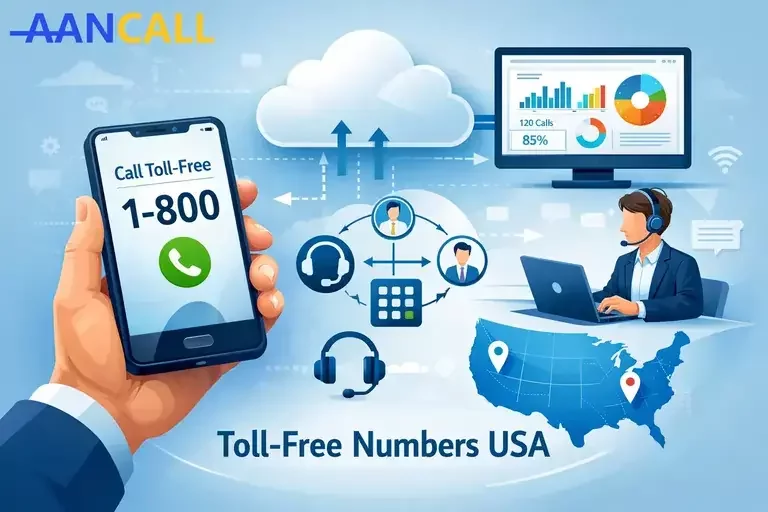
In an era where customer experience defines business success, making it easy for customers to reach you is no longer optional—it’s essential. One of the most effective ways to improve accessibility, trust, and conversions is by using a USA toll-free number.
A toll-free number allows customers to contact your business without paying for the call, removing friction and encouraging more inquiries, support requests, and sales conversations.
But toll-free numbers today are much more than just “free calling.” They are powerful tools for branding, nationwide presence, and customer engagement.
This guide will walk you through everything you need to know—from how toll-free numbers work to how to choose the right one for your business.
What is a US Toll-Free Number?
A toll-free number is a phone number where the receiving business pays for incoming calls instead of the caller.
These numbers are easily recognized by their prefixes:
- 800, 888, 877, 866, 855, 844, 833
Example format:
1-800-123-4567
Originally introduced to eliminate long-distance charges, toll-free numbers have evolved into a key part of modern business communication systems.
How Do Toll-Free Numbers Work?
When a customer dials your toll-free number:
- The call is routed through a cloud telephony or VoIP provider
- The system redirects the call to your chosen destination (mobile, office, or call center)
- Your business pays for the incoming call
This system allows businesses to operate flexibly and globally, without being tied to a physical location.
📌 Note:
Calls are typically free for callers using landlines. Mobile users may consume plan minutes depending on their carrier.
Why Toll-Free Numbers Still Matter in 2026
Even with unlimited calling plans, toll-free numbers remain highly effective.
They signal:
- Professionalism
- Accessibility
- Trustworthiness
Many customers still prefer calling businesses directly—especially for support, high-value purchases, or urgent queries. A toll-free number ensures they can do so without hesitation.
Toll-Free Number Conversion Statistics (2026)
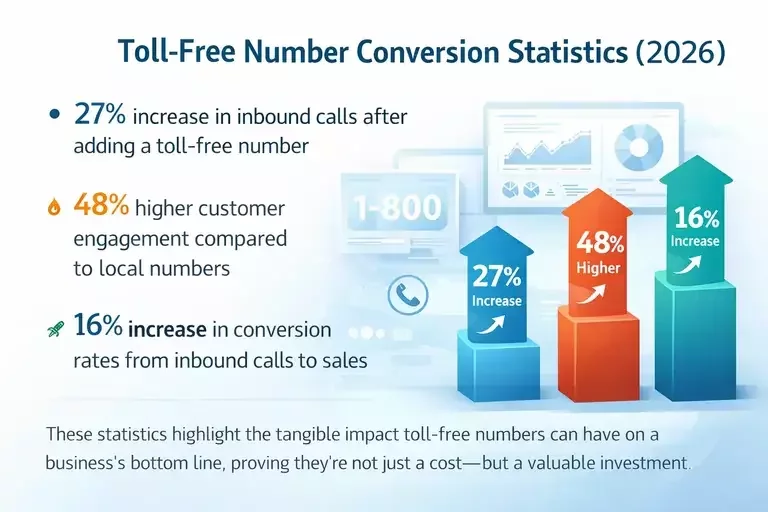
Adding a toll-free number is not just about convenience—it has a measurable impact on business performance. Based on industry trends and customer behavior patterns, businesses consistently see improvements in engagement and conversions after implementing toll-free numbers.
Key Statistics
- 27% increase in inbound calls after adding a toll-free number
- 48% higher customer engagement compared to local numbers
- 16% increase in conversion rates from inbound calls to sales
- Businesses using toll-free numbers report higher trust and credibility perception
- Customers are more likely to call when there is no cost barrier, especially for high-value services
Key Benefits of USA Toll-Free Numbers
- Lead generation
- Sales conversions
- Customer inquiries
- Online businesses
- Remote teams
- International companies entering the US market
- Faster issue resolution
- Higher satisfaction
- Better retention
- 1-800-FLOWERS
- 1-888-CALL-NOW
- Call routing
- IVR (interactive voice response)
- Voicemail-to-email
- Call analytics
- CRM integrations
1. Builds Instant Trust
Customers often associate toll-free numbers with established and reliable businesses. This perception can significantly improve engagement and response rates.
2. Increases Call Volume and Conversions
When customers know the call is free, they are more likely to reach out—especially during the decision-making stage.
This directly impacts:
3. Creates a Nationwide Presence
A toll-free number allows your business to appear accessible across the entire United States, regardless of your physical location.
This is especially valuable for:
4. Improves Customer Experience
Easy and cost-free communication leads to:
5. Enables Strong Branding (Vanity Numbers)
Vanity numbers like:
are easier to remember and can significantly boost marketing effectiveness.
6. Access to Advanced Features
Modern toll-free systems come with powerful tools such as:
These features help streamline operations and improve efficiency.
Toll-Free vs Local Numbers: Which One Should You Choose?
| Feature | Toll-Free Number | Local Number |
|---|---|---|
| Reach | Nationwide | Local area |
| Cost for caller | Free | May incur charges |
| Brand perception | Professional & scalable | Local & familiar |
| Best for | Growing businesses | Local services |
👉 Best practice: Use both strategically
- Toll-free for branding and support
- Local numbers for regional targeting
Who Should Use a USA Toll-Free Number?
Toll-free numbers are ideal for:
- E-commerce businesses
- SaaS companies
- Customer support teams
- Agencies and service providers
- Startups scaling nationally
- International businesses targeting US customers
How to Choose the Right Toll-Free Number
1. Choose a Memorable Number
Simple and easy-to-recall numbers improve customer response.
2. Look for Scalability
Ensure your system can handle growth—multiple agents, departments, and locations.
3. Check Features
Prioritize features like:
- Smart call routing
- Analytics
- Integrations with CRM tools
4. Understand Pricing
Most toll-free numbers cost between $10–$30 per month, depending on features and usage.
Common Mistakes to Avoid
- Choosing a complex or hard-to-remember number
- Not setting up proper call routing
- Ignoring call analytics
- Failing to promote your number across channels
Avoiding these mistakes can significantly improve your ROI.
Best Practices to Maximize Results
- Display it prominently on your website
- Add it to landing pages and ads
- Include it in email signatures
- Track performance using analytics
- Use IVR to manage high call volumes
To get the most out of your toll-free number:
How to Get a Toll-Free Number in the USA
Getting a toll-free number is simple:
- Choose a reliable provider - We recommend Aancall
- Select your preferred number (or vanity number).
- Configure call routing and features.
- Start receiving calls.
👉 If you’re exploring options, compare features like routing, analytics, and scalability before choosing a provider - Aancall offers all of these.
Future of Toll-Free Numbers
Toll-free communication is evolving with:
- AI-powered voice assistants
- Smart call routing
- Omnichannel communication systems
Businesses that adopt these technologies will see better efficiency and stronger customer engagement.
Frequently Asked Questions (FAQs)
What is a USA toll-free number?
A toll-free number allows customers to call a business without being charged, as the business pays for incoming calls.
Are toll-free numbers really free?
Yes, they are free for callers (especially from landlines), while the business covers the cost.
Can I use a US toll-free number internationally?
Yes, many providers allow international call forwarding, enabling global accessibility.
What is the difference between 800 and 888 numbers?
There is no functional difference—both are toll-free prefixes. The difference lies only in availability.
Do toll-free numbers work on mobile phones?
Yes, but mobile users may use their plan minutes depending on their carrier.
How much does a toll-free number cost?
Typically between $10 and $30 per month, depending on the provider and features.
Are vanity numbers worth it?
Yes, they improve brand recall and make marketing campaigns more effective.