What is a Virtual Number?
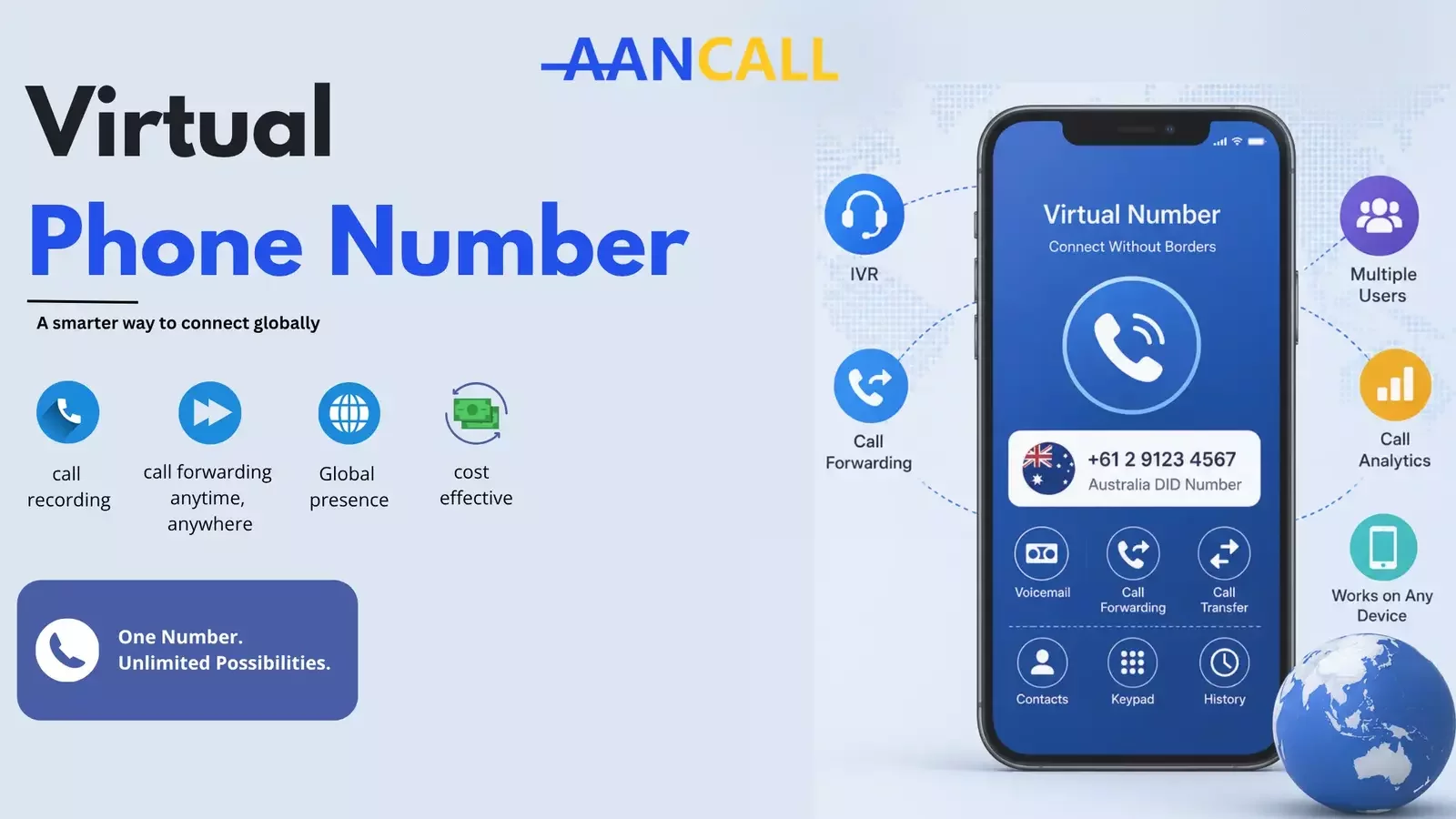
A virtual phone number — also called a cloud number, online number, or DID (Direct Inward Dialing number) — is a telephone number that exists independently of any specific SIM card, wall jack, or physical handset.
Instead of being wired to one location, it's provisioned on a provider's network and can be routed to any internet-connected device you choose.
That means the same number can ring on your laptop, your phone app, and a desk phone at once, or be reassigned to a completely different device in seconds — no technician, no new hardware, no waiting for a line to be installed.
How Does a Virtual Phone Number Work?
Virtual numbers run on VoIP (Voice over Internet Protocol) technology, which converts voice into data and sends it over the internet instead of traditional copper phone lines. Here's the basic flow:
- You get a number. A provider assigns you a number, or you port in one you already have.
- You set routing rules. Decide where calls should go — a mobile app, a desk phone, a voicemail box, or an auto-attendant menu.
- Someone calls the number. The call reaches the provider's network and gets converted to a VoIP call.
- It's delivered to your device. The call rings wherever you've told it to, anywhere there's a data or Wi-Fi connection.
Types of Virtual Phone Numbers
Local Numbers
A number with a specific area code, useful for giving a regional presence or personal identity in a particular city.
Toll-free numbers
Numbers like 800, 888, or 0800 are free for the person calling — common for customer service and support lines.
International numbers
A local number in another country, letting people there reach you as a local call even though you're based elsewhere.
Vanity numbers
Custom numbers that spell a word or follow a memorable pattern, mostly used for marketing.
Who Uses Virtual Phone Numbers?
- Remote and hybrid teams who need to answer a business line from anywhere.
- Freelancers and solopreneurs who want to separate work calls from their personal phone.
- Small businesses and startups that don't want to pay for physical phone line installation.
- People who travel or relocate often and want to keep the same number no matter where they live.
- Online sellers and marketplace users who don't want to list a personal number publicly.
- Global companies that want a local number in each country they operate in.
Personal vs. Business Virtual Numbers
| Personal Use | Business Use | |
|---|---|---|
| Typical goal | Privacy, a second line, travel flexibility | Local presence, team routing, professional image |
| Common features needed | Calling, texting, voicemail | Auto-attendant, call routing, multiple extensions, analytics |
| Number types used | Local | Local, toll-free, international |
| Devices | Usually a single phone app | Multiple devices across a team |
Common Virtual Phone Number Features
How Much Does a Virtual Phone Number Cost?
Pricing generally has two parts: a monthly fee for holding the number, and a cost for usage (calls and texts), which may be metered per minute or bundled into a flat plan. As a rough guide:
- Local numbers are usually the cheapest option.
- Toll-free numbers tend to cost more per minute, since the business absorbs the caller's cost.
- International numbers vary widely by country, depending on local telecom regulations.
- Free options exist (usually app-based), but often come with ads, limited minutes, or a number that can be reclaimed if it goes unused.
How to Choose a Virtual Phone Number Provider
Before signing up, it helps to check a few things beyond the sticker price:
- Number availability — does the provider have numbers in the area codes or countries you need?
- Porting policy — can you bring an existing number in, and can you take it with you later if you switch?
- Call quality and uptime — is the underlying network reliable, or is it a reseller of someone else's infrastructure?
- Support — is there a real person to call when something breaks, or only a chatbot?
- Compliance — is the provider properly registered, and does it follow caller ID authentication standards (STIR/SHAKEN) so your calls don't get flagged as spam?
How to Get a Virtual Phone Number
- Decide what you need it for. Personal privacy, a small business line, or a multi-country setup all call for slightly different number types.
- Choose your number type and location. Local, toll-free, or international — pick the area code or country that matches your audience.
- Sign up and provision (or port) the number. New numbers are usually active within minutes; porting an existing number can take a few days.
- Set your routing. Decide which devices ring, and set up voicemail, forwarding, or an auto-attendant if needed.
- Start using it. Make and receive calls and texts from the app, desk phone, or system you've connected.